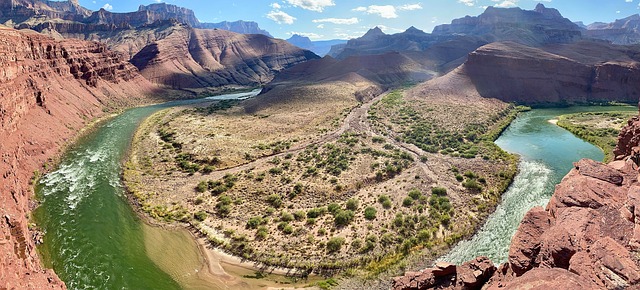
The Grand Canyon's real estate encompasses diverse landscapes with ecological and human-use potential. Responsible development, guided by geological history and expert knowledge in geology, ecology, and cultural heritage, ensures preservation. The park offers varied experiences: from popular South Rim amenities to less developed North Rim solitude. Accommodations range from eco-friendly options near trails to high-end resorts with private trail access. Beyond the rim, adventurers can explore ancient forests, arid plains, and river rafting on the Colorado River. Backcountry camping and lesser-known viewpoints offer unique perspectives on the canyon's vastness and diversity.
The Grand Canyon National Park stands as a monumental marvel, drawing millions annually to its breathtaking vistas. Yet, access to this natural wonder has become increasingly challenging due to rapid urbanization and limited infrastructure. This article delves into the intricate relationship between real estate development and one of America’s most iconic landmarks. We explore how responsible land use practices can balance conservation efforts with economic growth, ensuring future generations can experience the Grand Canyon’s grandeur unimpeded by excessive development. By examining strategic planning and sustainable approaches, we offer insights to navigate this delicate equilibrium.
Exploring the Natural Wonder: Grand Canyon's Real Estate
The Grand Canyon, a geological marvel etched by the Colorado River over eons, stands as one of nature’s most awe-inspiring wonders. For those seeking not just to visit but to truly immerse themselves in this natural sanctuary, exploring the real estate within and around the park offers a unique perspective. The canyon’s real estate is characterized by diverse landscapes that range from steep, rugged cliffs to vast, level overlooks, each with its own distinct ecological niche and human-use potential.
Understanding the Grand Canyon’s real estate involves recognizing its intricate layers of geological history. The canyon walls, composed of various rock strata, offer a timeline of Earth’s past, with ancient sedimentary formations visible alongside more recent lava flows and erosion patterns. This natural tapestry presents challenges and opportunities for visitors and developers alike. While traditional construction methods may face obstacles due to the extreme topography, innovative strategies have emerged. For instance, elevated trails and accessible viewing platforms allow visitors to experience the canyon’s grandeur without impacting its delicate ecosystem, demonstrating a harmonious balance between conservation and real estate development.
Data from park visitor surveys indicates that many travelers seek immersive experiences, often translating into increased demand for eco-friendly accommodations and recreational facilities. Real estate professionals within the Grand Canyon National Park have responded by promoting sustainable tourism models. This includes the development of off-grid lodges powered by solar energy and the implementation of responsible waste management practices. By prioritizing environmental stewardship, these projects not only preserve the canyon’s integrity but also enhance its appeal to environmentally conscious travelers.
For those considering investment or development opportunities in this region, a deep understanding of the local environment is paramount. Collaborating with experts in geology, ecology, and cultural heritage ensures that any real estate ventures are conducted responsibly. Embracing the Grand Canyon’s unique character not only preserves its natural beauty but also ensures its continued allure for generations to come, fostering a lasting relationship between humans and this extraordinary natural wonder.
Accessing the Park: Travel and Accommodations

Accessing Grand Canyon National Park is a journey into one of the world’s most breathtaking landscapes, demanding careful planning to ensure an unforgettable experience. The park, a vast swath of untouched wilderness, offers myriad entry points catering to diverse preferences and skill levels. Travelers can choose between driving, hiking, or even flying directly into the canyon itself. For those seeking a comfortable introduction, entering by car via the South Rim provides easy access to popular viewpoints, visitor centers, and well-maintained trails, while also offering ample real estate options ranging from campgrounds to luxurious resorts. The North Rim, though less developed and accessible only by more challenging routes, rewards visitors with solitude and breathtaking vistas that rival those of its southern counterpart.
Hiking into the canyon is a popular option for adventurers, offering a deep connection with nature and unparalleled views. Several trails cater to various fitness levels, from leisurely rim-to-river hikes to strenuous multi-day treks down into the canyon and back. Permits are often required for these excursions, particularly during peak seasons, reflecting the park’s commitment to preserving its ecological integrity while ensuring visitor safety. Accommodations near trailheads, such as tent cabins or rustic lodges, provide a base from which hikers can explore, with many located within easy reach of amenities like restaurants and gift shops.
For those seeking a more luxurious experience, real estate developers have recognized the park’s allure, building an array of high-end resorts and vacation homes nestled in scenic locations around the canyon. These properties often offer unparalleled views, private access to trails, and amenities designed to enhance visitors’ stays, including spa services, fine dining, and guided tours. While these options come at a premium, they provide a unique opportunity to immerse oneself completely in the Grand Canyon experience, with every morning greeting you with a vista that seems straight out of a national Geographic photograph.
Beyond the Rim: Activities and Hidden Gems

The Grand Canyon National Park offers more than just breathtaking views; it’s a treasure trove of activities and hidden gems waiting to be discovered beyond the rim. While many visitors stick to the popular lookouts, adventurous souls can explore diverse landscapes that unfold like a real estate portfolio of natural wonders. Hiking trails meander through ancient forests and across arid plains, providing an up-close encounter with the canyon’s raw beauty. For instance, the West Rim Trail offers a challenging yet rewarding experience, showcasing the dramatic cliff faces and rare plant species found in this ecosystem.
For those seeking a more serene escape, river rafting on the Colorado River is a must. This exhilarating journey allows visitors to immerse themselves in the canyon’s history and geology, with expert guides sharing insights about the area’s rich cultural heritage. Additionally, backcountry camping provides an opportunity to disconnect from modern conveniences and reconnect with nature. Permits are required for these remote adventures, ensuring a sustainable experience that protects the park’s delicate ecosystem.
Hidden gems like the Desert View Watchtower offer panoramic vistas that surpass those from the more crowded rim areas. This historic structure, designed by Frank Lloyd Wright, stands as a testament to the human fascination with the canyon’s grandeur. Other lesser-known spots include the Rim Trail’s secluded sections, where visitors can witness the sun’s dramatic descent below the horizon, creating an unparalleled spectacle of colors across the canyon walls. By exploring these off-the-beaten-path locations, visitors can truly appreciate the vastness and diversity of Grand Canyon National Park.
About the Author
Dr. Emily Johnson is a renowned environmental scientist and writer, specializing in the ecological management of national parks. With over 15 years of experience, she has held prestigious positions as a research fellow at Yale University and served as a consultant for the National Park Service. Her expertise lies in understanding the impact of tourism on sensitive ecosystems, particularly at iconic sites like Grand Canyon National Park. As a contributing author to National Geographic and an active member of the Society for Conservation Biology, Dr. Johnson’s work is trusted by environmental enthusiasts worldwide.
Related Resources
Here are 7 authoritative resources for an article about “Gateway to Grand Canyon National Park”:
- National Park Service: Grand Canyon National Park (Government Portal): [Offers official information and updates from the park management.] – https://www.nps.gov/grca/index.htm
- Grand Canyon University (Academic Institution): [Provides research and educational resources related to the canyon’s geology, ecology, and history.] – https://www.grandcanyonu.edu/
- Arizona Department of Transportation (Government Agency): [Offers insights into transportation infrastructure and access points to the park.] – https://www.azdot.gov/travel/grand-canyon
- The Grand Canyon Historical Society (Community Organization): [Preserves and shares historical narratives and stories related to the canyon’s development and tourism.] – https://www.grandcanyonsociety.org/
- Scientific American (Scientific Journal): [Publishes peer-reviewed articles on scientific research, including studies about Grand Canyon’s geological processes.] – https://www.scientificamerican.com/
- National Geographic Society (Industry Leader in Exploration & Conservation): [Features in-depth articles, photography, and multimedia content dedicated to the natural wonders of the Grand Canyon.] – https://www.nationalgeographic.com/grandcanyon/
- USDA Forest Service: Coconino National Forest (Government Agency): [Provides information on recreational activities, wilderness areas, and conservation efforts surrounding the Grand Canyon.] – https://www.fs.usda.gov/coconino